
Key Takeaways from a Focus Group Study on Sports Betting and RG Messaging Among College Men
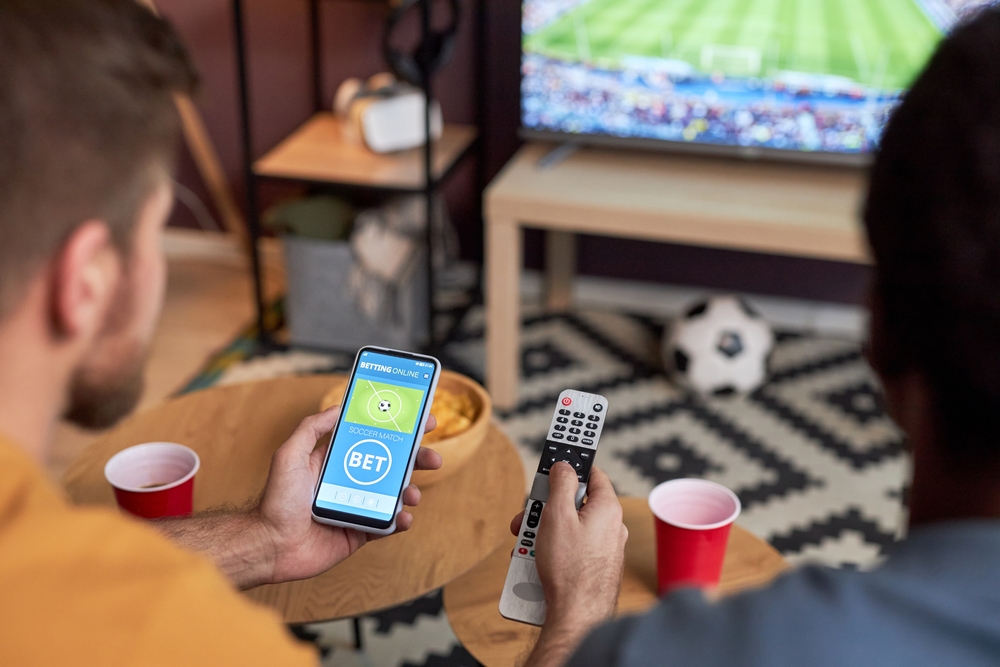
Sports betting is increasingly popular among college men – and the risks are high
Since the legalization of sports betting in the U.S. in 2018, gambling opportunities have expanded rapidly. College students, particularly men, are among the most engaged and most at risk. Sports betting can lead to financial loss, distress, and academic decline. Yet, existing Responsible Gambling (RG) messages often fail to capture this group’s attention or influence their behavior.
College men understand responsible gambling – but don’t trust the source of RG messages
Participants described RG as setting limits, understanding risks, and betting with awareness. However, they credited this knowledge to their own research, not to gambling operators’ RG messages. Most viewed operators’ RG efforts as disingenuous or purely performative, citing a clear conflict between operators’ profit motives and player protection.
“They’ll tell you ‘Gamble Responsibly,’ … but they’re always trying to show you something else. They’re trying to push you towards certain bets. I don’t get the sense that the app at all wants me to gamble responsibly.” – Focus group participant
This widespread mistrust challenges the Reno Model’s principle that the gambling industry, regulators, and individuals themselves share responsibility for consumer protection.
Self-appraisal messages resonate more than generic advice
Participants preferred self-appraisal messages (i.e., messages that prompt reflection) over generic statements. The message “Is money all you are losing?” stood out for encouraging users to think about the broader personal costs of gambling, such as strained relationships or lost time. By contrast, directive or prescriptive statements (e.g., “A winner knows when to stop”) were often dismissed or even interpreted as encouraging gambling.
College men want personalized and transparent communication
Participants called for more personalized, data-driven feedback (e.g., monthly spending summaries or statistics on operator profits) similar to Spotify Wrapped. Such features could make gambling risks more tangible and help individuals reflect on their behavior. They also wanted messages tailored to betting types (e.g., parlays vs. moneylines) and risk levels.
“If I got a message saying ‘you’ve spent X amount of dollars, you should watch your spending,’ and they pop that up consistently … that would put it in perspective of how much money people are losing on these sites.” – Focus group participant.
Action Steps to Consider: Rebuild trust and personalize prevention
This study highlights a need to modernize RG messaging for emerging adults. Based on these participants’ feedback, effective prevention efforts should:
- Acknowledge mistrust of operators’ RG messages, and increase transparency around industry practices and messaging.
- Emphasize reflection over restriction, using brief, thought-provoking prompts that encourage sports bettors to pause and consider how gambling fits into their broader life goals.
- Design for personalization, leveraging app-based data to provide tailored feedback to individual users about time spent betting, net winnings/losses, and behavioral changes over time.
If you want to learn more about responsible gambling practices or our research, visit our website at thegamblingclinic.com.
This brief is based on a focus group study involving focus 12 college men who sports bet:
Dow, C. V., Andersland, M. D., Velandia, E. A., Pfund, R. A., & Whelan, J. P. (2025). The perceptions and receptiveness to responsible gambling by college men who sports bet: A focus group study. UNLV Gaming Research & Review Journal, 29(1), 153-172. https://doi.org/10.9741/2327-8455.1501
About the student authors:
Chance V. Dow is a doctoral student in clinical psychology at the University of Memphis, a member of the Tennessee Institute for Gambling Education and Research, and a therapist at The Gambling Clinic. His interests include sports betting among emerging adult populations, responsible gambling, and the intersection between masculinity and gambling.
Matthew D. Andersland is a doctoral student in clinical psychology at the University of Memphis, a member of the Tennessee Institute for Gambling Education and Research, and a therapist at The Gambling Clinic. His interests include gambling disorder treatment, co-occurring substance use and gambling, and mindfulness in the treatment of gambling disorder.
Emily A. Velandia is a doctoral student in clinical psychology at the University of Memphis and a member of the Stress and Trauma Evaluation and Prevention Science Lab. Emily also conducts clinical work as a practicum student at the UTHSC Center on Developmental Disabilities and Irby Psychological Services. Her research and clinical interests revolve around building strengths in families that have experienced trauma, with an emphasis on collaborative, community-engaged methods.